ServicesStorm Doors
Storm Doors in Lynnwood
A good storm door keeps wind-driven rain off your entry door and lets you trade glass for screen when the weather warms up. We measure the opening carefully, fit the door square, and adjust the closer so it shuts gently and latches every time.
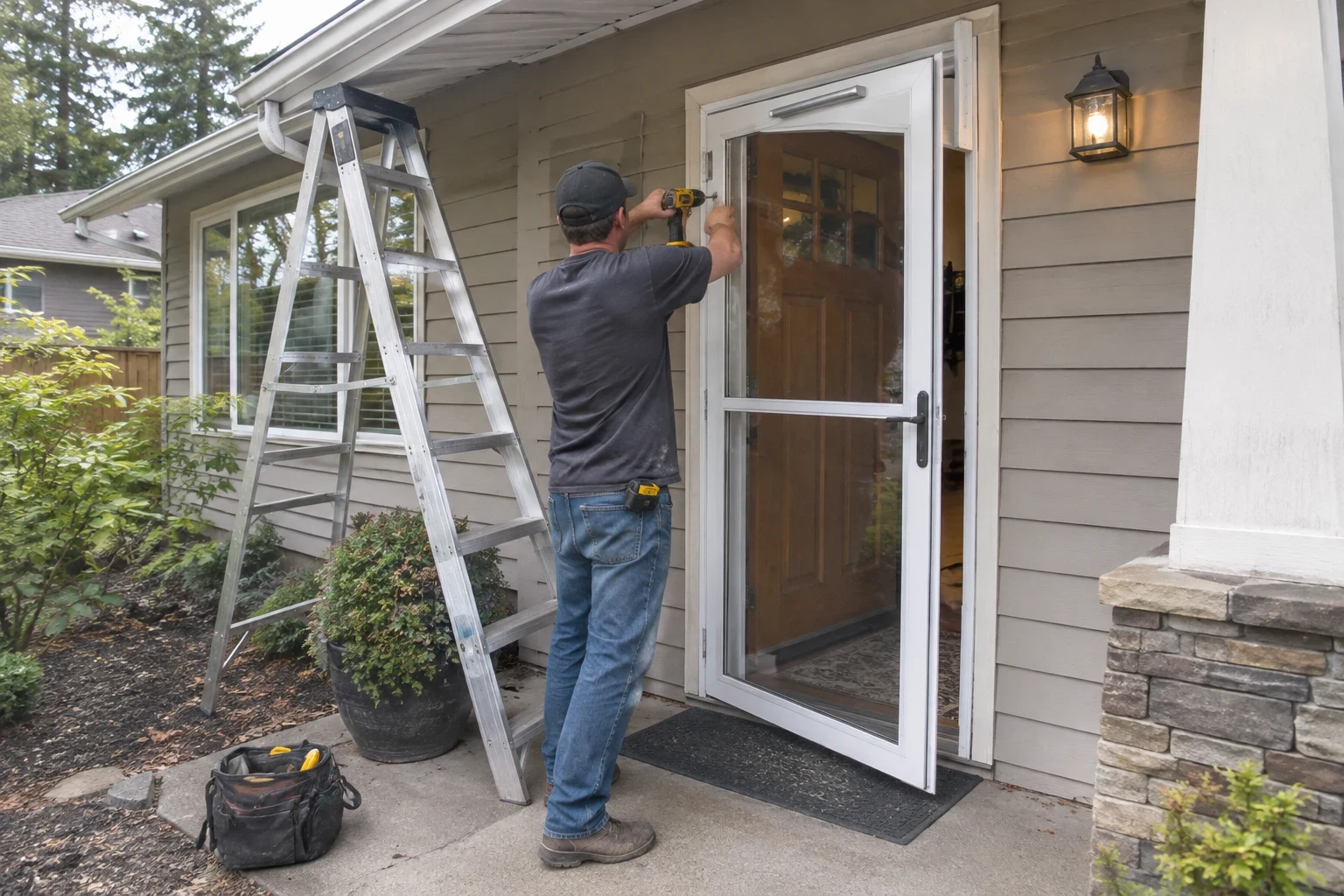
What a Storm Door Does for Your Entry
A storm door is a second, lighter door hung on the exterior casing in front of your main entry door. It blocks rain and wind before they reach the weatherstripping and finish of the door behind it. With a screen panel in place, it also lets you open the entry door for airflow without letting bugs in.
Most storm doors fail at the mounting rather than the panel. The hinge rail pulls away from soft or rotted brick mould, the door sags, and the latch stops catching. That is why we check the casing before we sell you anything, and we tell you plainly if the trim needs work first.
We treat each install the way we would want a neighbor to treat ours. If your entry door already has a deep overhang and good weatherstripping, a storm door may not add much, and we will say so.
What Our Storm Door Work Includes
- Measuring the opening at three points
- We measure width and height at the top, middle and bottom of the opening and check it for square. Older openings are rarely true, and those numbers decide whether a standard size with an expander will work or a custom size is the better fit.
- Frame and core choices explained
- Aluminum frames are light and resist rust. Doors with a wood or foam core and reinforced corners hold their shape better on a busy entry. We explain the tradeoffs so you can pick what suits your door.
- Glass and screen setup
- Full-view doors use interchangeable glass and screen panels. Retractable screen models roll the screen into a cassette at the top, so you switch for airflow without storing a panel. Low-E glass is available where heat gain is a concern.
- Proper mounting and drip cap
- We fasten the Z-bar hinge rail and drip cap to sound casing so water sheds away from the top of the door. The bottom expander and sweep get set to close the gap at the threshold.
- Closer, chain and latch adjustment
- We tune the pneumatic closer so the door shuts without slamming, and we fit the wind chain to keep a gust from bending the hinge rail. The latch and deadbolt are aligned to the strike.
- Haul-away and cleanup
- We take the old storm door with us, sweep up, and walk you through how to switch panels and adjust the closer as the seasons change.
Signs It Is Time for a New Storm Door
The door sags or drags
A drooping door usually means the hinge rail screws have stripped out of soft wood or the frame has racked. Tightening rarely holds for long once that happens.
The closer no longer works
If the door slams or stays open, the pneumatic closer has lost pressure or its bracket has torn loose. On an old door, the bracket mount is often the weak point.
Daylight around the edges
Gaps at the sweep or along the latch side let rain and drafts reach your entry door, which defeats the purpose of having a storm door at all.
Torn screens and cloudy panels
Brittle screen mesh and scratched or yellowed acrylic panels are common on older doors. Replacement panels for discontinued models can be hard to find.
Your entry door finish is failing
Peeling paint or a weathered stain on the main door is a sign it is taking the weather head on. A storm door can shield it, as long as the setup does not trap heat.
What Moves the Price of a Storm Door
Storm door pricing depends mostly on the door you choose and the condition of the opening it hangs on. We put both in a written quote so you can see where the money goes. Flexible payment options are available if that helps.
Frame material and core
A basic aluminum frame costs less than a heavier door with a reinforced core and welded corners. Heavier doors last longer on entries that see a lot of traffic or wind.
Glass and screen style
Full-view, mid-view and retractable screen models are priced differently. Low-E or tempered glass upgrades add to the cost.
Standard or custom size
Most openings take a standard size with an expander. Openings that are unusually wide, tall or out of square may need a custom-sized door.
Condition of the casing
If the brick mould or casing is soft, it has to be repaired before a door can hold to it. We show you what we find before adding any work.
Hardware upgrades
Keyed deadbolts, upgraded handle sets and heavy-duty closers each add to the total.
How a Storm Door Install Runs
- 1
A no-pressure consultation by phone
You tell us about your entry, the door you have now, and what bothers you about it. We answer questions and set a time to come out and measure.
- 2
Measuring and inspecting the casing
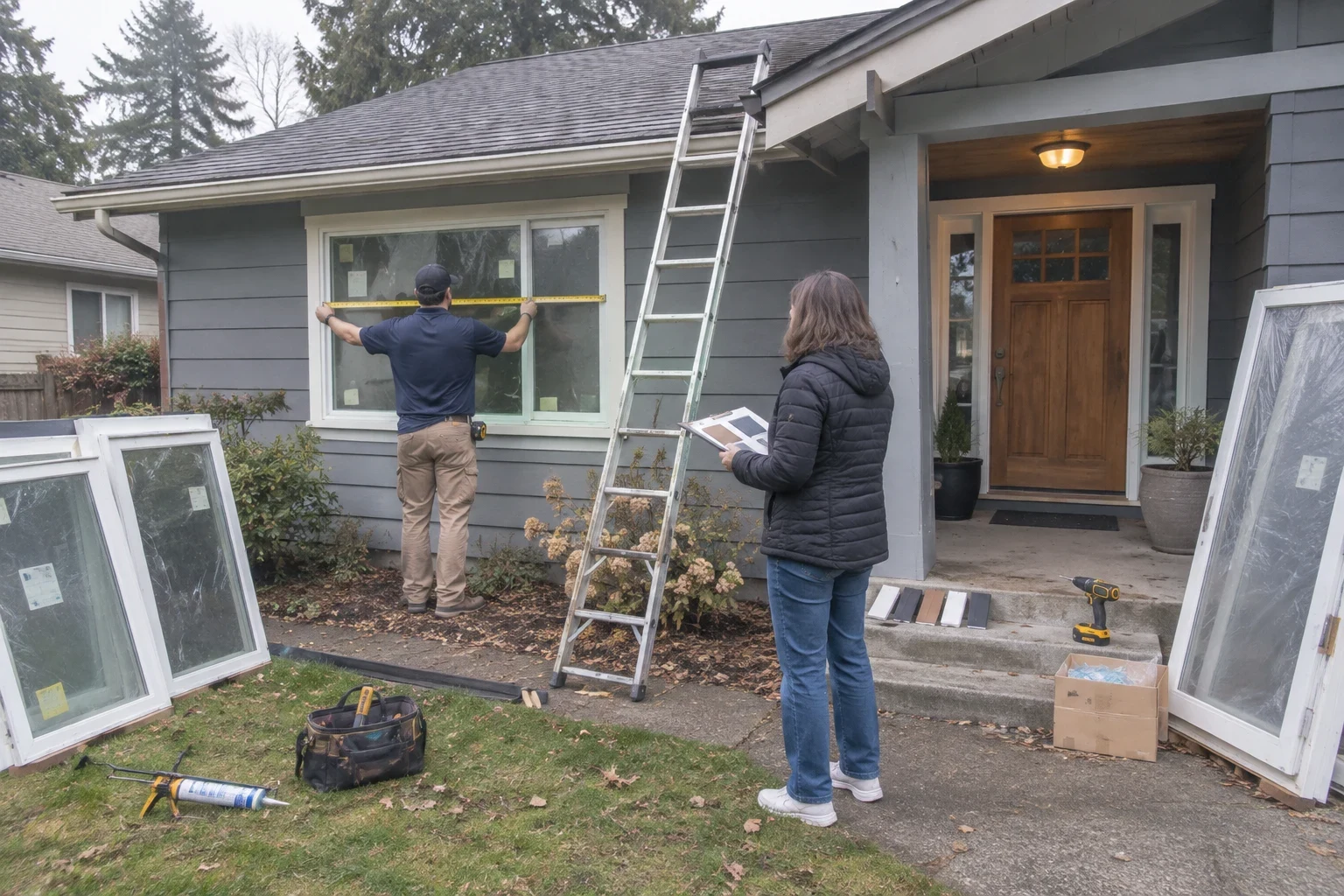
At your home we measure the opening, check for square, and probe the brick mould and casing for rot. You get a clear quote and a straight answer on whether any trim needs attention.
- 3
Removing the old door
On install day we take down the old storm door and its hardware, then clean and check the mounting surface. Any surprise under the old frame gets shown to you before we go further.
- 4
Hanging and adjusting
We mount the hinge rail and drip cap, hang the door, set the expander and sweep, then install the latch, closer and wind chain. Most installs are finished in a single day.
- 5
Walkthrough and cleanup
We show you how to swap panels or use the retractable screen, haul away the old door, and leave the entry clean.
Storm Door Questions We Hear Often
Can a storm door damage my entry door?
It can if the setup traps heat. A full-glass storm door in front of a dark or vinyl-clad entry door that faces strong afternoon sun can build up enough heat to warp or fade it. We look at your door's exposure and material and may suggest a screen panel, vented glass or low-E glass to prevent that.
How long does installation take?
Most installs are finished in a single day. If the casing needs repair before the door can be hung, we tell you at the measuring visit so the schedule has no surprises.
Do I need a storm door if my entry door is in good shape?
Not always. If your entry sits under a deep porch roof and the weatherstripping seals well, a storm door adds less. It makes the most sense on exposed entries, older wood doors, or when you want screened airflow.
Should I choose full-view or a retractable screen?
A full-view door shows off your entry door and swaps glass for screen panels seasonally. A retractable screen stays in the door and rolls up when not in use, so there is nothing to store. Many people in our wet Lynnwood winters like the retractable style because the switch takes seconds.
Will a standard storm door fit my opening?
Usually, yes. Standard doors use an expander at the bottom to cover small height differences. If our measurements show the opening is too far out of square or an odd size, we will recommend a custom door and explain why.
Ready for a Storm Door That Closes Right?
Tell us about your entry and we will set up a visit to measure and check the casing. You get a clear, free quote with no pressure to decide on the spot.